| REGIONS: France |

Quick History of the French Canals:
Engineering the Canals of France
Today, the French canals are synonymous with leisure cruising, picturesque villages and vineyard-lined waterways. These tranquil waterways were originally built for transporting goods, connecting regions, and strengthening France’s economy.
The Origin of the French Canal Network
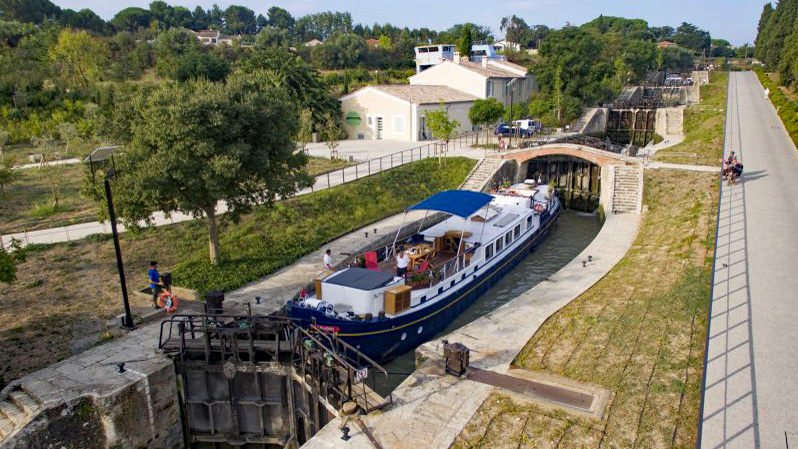
Hotel Barge Anjodi: Canal du Midi, Fonserannes Lock with its 8 oval chambers and 9 gates
The history of canal network of France stretches back to Roman times, although most early waterways were not part of a unified canal system. The Romans constructed canals and improved rivers primarily to support agriculture, drainage, trade, and the movement of goods. During the Middle Ages, many Roman waterways fell into disuse, but rivers remained important transportation routes. Local authorities, monasteries, and towns gradually developed mills, weirs, locks, and other hydraulic works.
By the late Middle Ages, France was beginning to see more ambitious attempts to manipulate waterways for navigation and commerce. The construction of canals and navigable channels was closely connected to the growth of towns and regional trade. These works were made particularly around major rivers such as the Seine, Loire, Rhône, and Garonne.
Before the 16th century, France did not yet possess a national canal network. Water transport depended largely on natural rivers and short, locally built canals or river improvements. The technological and political foundations for a much more extensive canal system emerged during the Renaissance. It culminated in major projects such as the construction of the Canal de Briare’s which began in 1605 under Henri IV. Opened in 1642, this canal connected the Loire and Seine river systems and demonstrated the potential of artificial waterways to transform inland trade.
Purpose of the French Canal Network
Before railways and modern roads, the most effective way to transport heavy goods was via the waterways. Moving cargo by boat required far less effort than hauling it by horse-drawn carts over rough roads.
From the 16th century onwards, French rulers recognized that a connected waterway network could strengthen trade, improve military logistics, and increase economic prosperity. Canals provided a way to link rivers by creating continuous transportation routes across the country.

One of the most ambitious goals was to connect the Atlantic Ocean with the Mediterranean Sea. Such a route would allow vessels to avoid the long and dangerous journey around Spain and through the Strait of Gibraltar. This would save both time and money. It was this vision that eventually led to the creation of the Canal du Midi, one of the greatest engineering achievements of the 17th century. At 240km (149 miles) in length with 65 locks to pass through, those enjoying the beauty of the Canal du Midi will have the opportunity to witness such engineering feats as the Saint-Ferréol reservoir, the Malpas Tunnel, and a host of aqueducts and canal bridges.
The Golden Age of Canal Construction
The most significant period of canal construction in France took place between the 17th and 19th centuries.
The Canal du Midi, commissioned by King Louis XIV and designed by Pierre-Paul Riquet, began construction in 1667. Remarkably, the main canal was completed in just 14 years, opening in 1681 after the efforts of approximately 12,000 workers. The canal stretched for 240 kms / 150 miles and incorporated innovative locks, bridges, aqueducts, and reservoirs that were revolutionary for the time.
The success of the Canal du Midi inspired further canal construction throughout France. During the 18th and 19th centuries, additional waterways were developed to connect other major river systems.

French Hotel Barge Athos crossing the pont-canal de l’Orb
Notable projects included:
- The Canal de Bourgogne, linking the Seine and Rhône basins.
- The Canal du Nivernais, built to transport timber and agricultural products.
- The Canal de Briare, connecting the Loire and Seine river systems.
- The Canal Latéral à la Garonne, constructed between 1838 and 1856, extended the Canal du Midi westwards from Toulouse towards Bordeaux, completing an inland waterway connection between the Atlantic and Mediterranean.
Engineering of the French Canals
Unlike modern infrastructure projects, canal construction often took decades.
While the Canal du Midi’s main route was completed in 15 years, many other canals required several decades of planning, financing, and construction. Engineers had to overcome significant geographical challenges including hills, river valleys, and water supply issues.
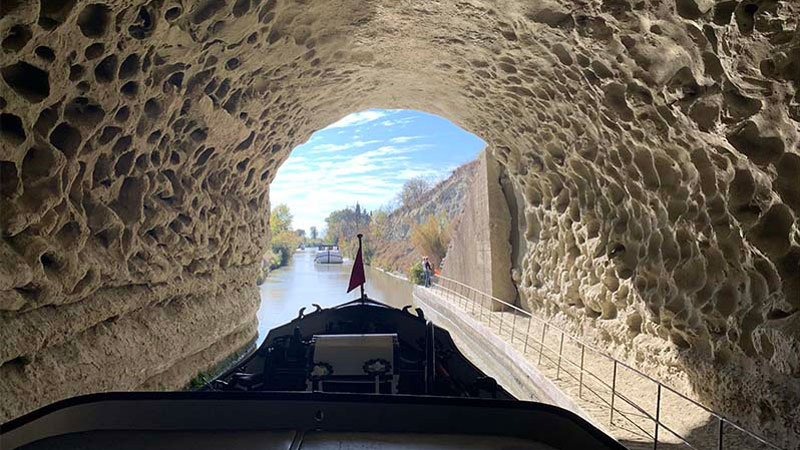
Barge Anjodi leaving Malpas Tunnel (Canal du Midi)
Construction relied almost entirely on manual labor. Thousands of workers excavated channels by hand, built locks from stone, and created reservoirs to ensure a reliable water supply. The scale of these projects was extraordinary for their time, and many remain in use today thanks to the quality of their original engineering.
The Impact of French Canals
For over two centuries, canals formed the backbone of inland transport in France. They carried wine from vineyards, grain and agricultural produce, timber and coal, and even provided a postal service.
Canals helped regional economies flourish and enabled the growth of many towns and cities along their routes. They also encouraged technological innovation, with French engineers developing increasingly sophisticated lock systems, aqueducts, and water management techniques.
The Decline of Commercial Traffic on the French Canals
The arrival of railways in the 19th century gradually reduced the importance of canals for freight transport. Rail offered faster journeys and greater flexibility, while roads and motor vehicles accelerated this trend during the 20th century.

Barge Enchante – Waiting for the lock to open
While many canals experienced declining commercial traffic, they found a new purpose. Their tranquil waters, historic structures, and picturesque surroundings made them ideal destinations for leisure boating and tourism.
Today, the network of the French canals is one of the most popular inland cruising destinations in Europe. It attracts visitors from around the world who come to experience the country’s landscapes, heritage, and culture from the water.
Experience the French Canals
France’s canals are far more than scenic waterways. They represent centuries of ambition, innovation, and engineering excellence. Built to unite regions, strengthen trade, and support economic growth, they transformed the landscape of France and helped shape the nation we know today.
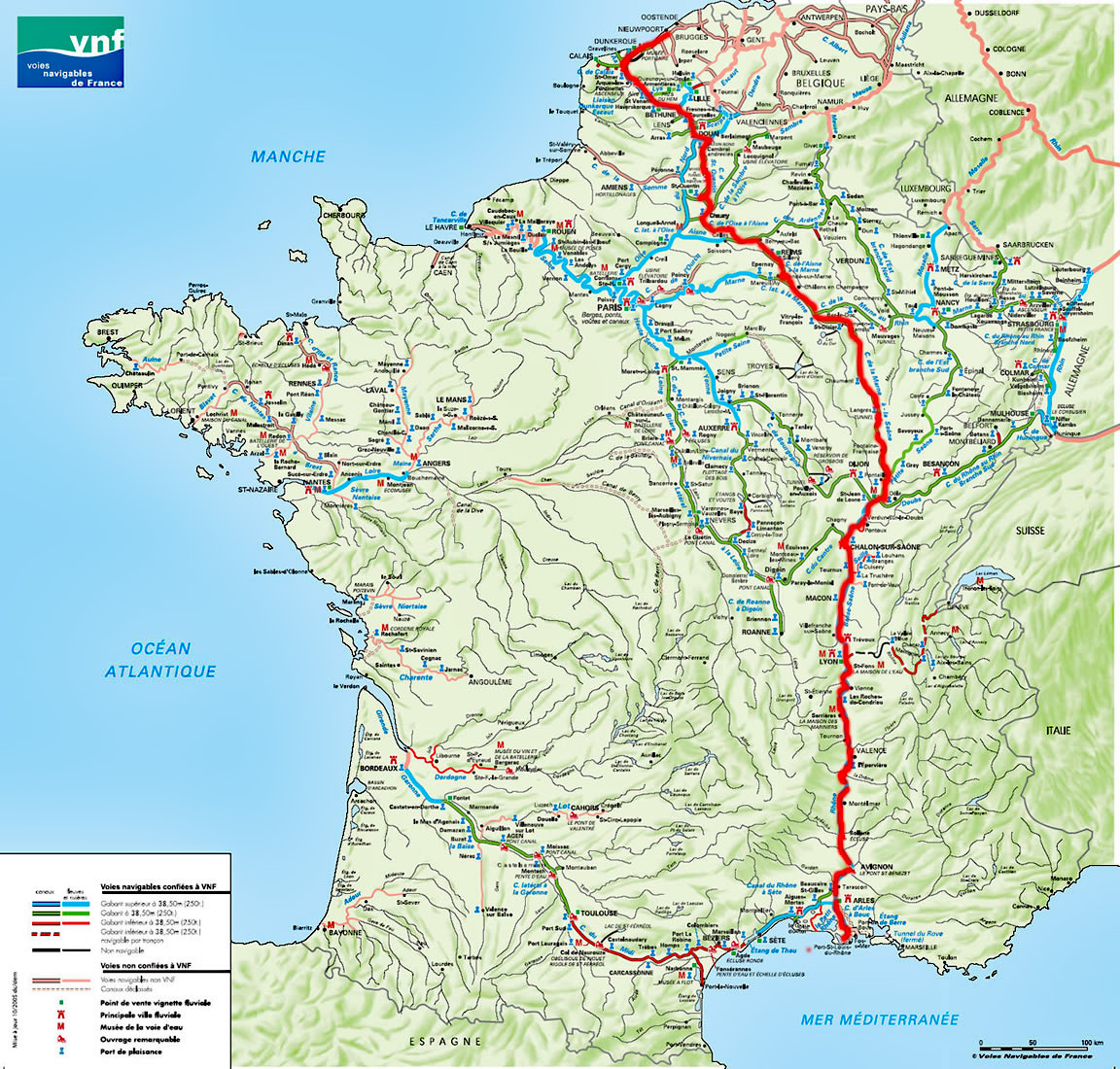
VNF map of French canal network
Whether viewed as historic monuments or enjoyed as cruising destinations, these waterways remain a living testament to one of Europe’s greatest infrastructure achievements.
Contact Us to discover more and book your place on one of these amazing canals.
HOME > REGIONS > Quick History of the French Canals
PARADISE CONNECTIONS
Your Barging Specialists
www.BargeCharters.com
9/7/2026