| Barging in Autumn |

All About Canals
How Water Levels Affect Canal & River Cruises

One factor that shapes hotel barge cruising in Europe is the water level. Calm canals, leafy towpaths, and unhurried progress can have guests assuming that the water beneath their barge is constant and predictable. In reality, water levels vary all the time and are influenced by weather, geography, and how each waterway is managed.
Understanding why this happens helps explain why canal cruising is generally more reliable than river cruising, and why occasional restrictions are a normal part of operating historic waterways in a changing climate.
Nature versus Design
Basically, the difference comes down to nature versus design. Rivers are natural, free-flowing systems. Their levels depend directly on rainfall, snowmelt, and seasonal patterns across wide catchment areas. A wet spring can rapidly swell rivers, while a dry summer causes water levels to drop just as fast. Because rivers are always moving downstream, water cannot easily be stored or held back without major engineering. They must keep flowing to maintain downstream ecosystems and navigation.
Canals are a different case, though. These man-made waterways were designed from their initial concept to support navigation. The engineers who built the various European canal networks understood that boats need depth and consistency. Therefore, canals were created with systems to manage water rather than simply react to it. Locks, pounds, weirs, feeders, and reservoirs all work together to keep levels within a usable range for as long as possible.
Canals versus Rivers

A key reason that canals are more reliable is due to their water supply. Most canals are fed by reservoirs that collect water during wetter times, particularly in autumn and winter. Rainfall that might otherwise wash away down valleys is captured and stored, to be gradually released during the barge cruising season. The stored water is a buffer against short-term droughts. Even if there is little rainfall for weeks, the canal can continue to operate normally because it is drawing from reserves built up earlier in the year.
Rivers do not have this luxury. While dams and large reservoirs exist on some rivers, other navigable rivers respond almost immediately to changes in rainfall. A dry spell can quickly reduce water levels, and thus draft, which can make navigation unsafe. Conversely, heavy rain upstream can raise levels and affects currents downstream, also leading to closures for safety reasons.
Slower Travel
Flow rate is another important factor. In a canal, water movement is slow and controlled. When a lock is operated, water moves from one level to another, but once the lock gates are closed, the water is largely still. This means overall water loss is relatively low and predictable. Operators can calculate daily water use and manage reserves accordingly.
On the other hand, rivers must keep water moving at all times. Weirs allow water to pass downstream even when locks are closed, which means there is a constant flow leaving the navigable section. During dry periods, this continuous loss becomes significant. Authorities cannot simply stop the river from flowing without causing serious environmental damage further downstream.
Protection of the Environment
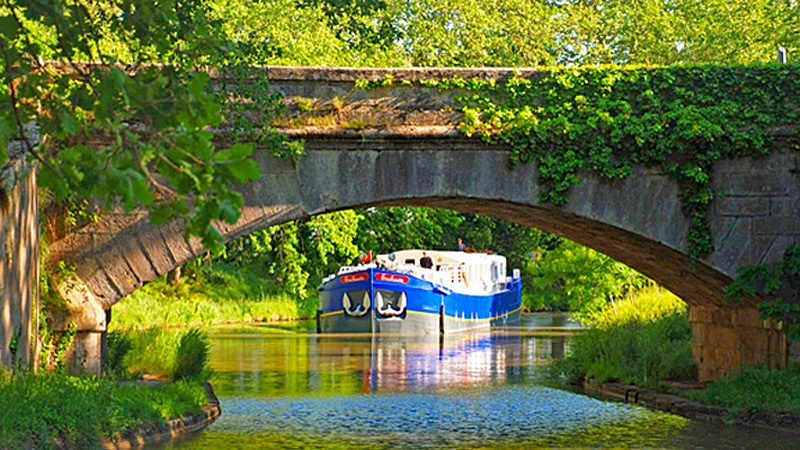
Environmental protection plays a growing role in how waterways are managed, especially during droughts. Fish, plants, and entire ecosystems depend on water levels and flow rates. On rivers, when levels fall too low, local authorities may intervene to limit or ban water extraction entirely. This is particularly common on smaller rivers, such as the Armançon in Burgundy which is used to supply the Burgundy Canal. When these rivers reach critically low levels, the local prefect may restrict water use to maintain water quality and protect fish stocks.
While not immune to these pressures, canals are better equipped to cope. Because their supplies are managed, canal authorities can often adjust operations to stretch available water. This might include reducing lock operating hours, grouping boats through locks, or temporarily closing lightly used sections to conserve water for main routes. These measures are usually planned and communicated well in advance, minimizing disruption to hotel barge itineraries.
Lastly, canals usually benefit from different sources of water supply along their length. If one reservoir is running low, a barge can move a few miles to another section supplied by a reservoir with higher stocks of water. Conversely, rivers are only supplied by the same water that flows from source to sea.
Effects of the Environment
Not all canals are equally resilient. The most vulnerable canals during dry periods are typcally those that rely on rivers rather than reservoirs for their supply. In these cases, the canal effectively shares the river’s problems. If a river used as a feeder, such as the Armancon, drops too low, it cannot provide enough water, and restrictions may follow. Conditions on canals tend to change more slowly and predictably than on rivers, allowing operators to adapt routes and schedules with less impact on the guest experience.
Flooding tells a similar story from the opposite direction. Rivers can rise rapidly after heavy rainfall, increasing current speed and making navigation more difficult. Canal levels can also rise. Their excess water is usually diverted through specially designed spillways and overflow channels. While extreme weather can affect any waterway, canals generally offer a calmer and more controlled environment.
Reliability and Resilience
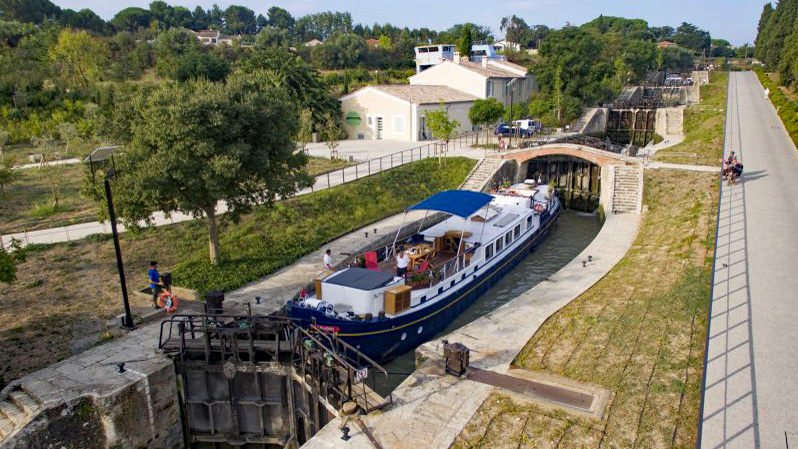
For hotel barge cruising, this reliability is a major advantage. Cruises are planned months or even years in advance, and guests expect a smooth, unhurried journey. The managed nature of canals makes it far easier to deliver that experience consistently. If adjustments are needed, they are modest and handled behind the scenes with alternative routes or shore excursions.
Water levels will always vary. Europe’s waterways are living systems, shaped by weather patterns and environmental responsibilities as much as by engineering. What canals offer is resilience. They have the ability to absorb those changes and keep cruising enjoyable and dependable. That balance between careful management and respect for nature is what has kept canal cruising thriving for centuries, and why it remains such a reliable way to explore Europe from the water.
Note: Summer 2026
The summer of 2026 is a good example. Many river cruises on the Rhine had problems as their ships could not navigate the low water levels. However, the Hotel Barge La Nouvelle Etoile with their shallow draft, has not reported any problems with their Germany/Luxembourg itinerary on the Moselle.
The VNF (Voies Navigables de France) has closed parts of the canals in Burgundy either due to scheduled works or water levels. This has not been a problem as the affected hotel barges had plenty of time to change their route and still provide a high quality cruise.
Your Hotel Barge Canal Cruise

Whether gliding along the tranquil canals, exploring locks and water elevators, or discovering Europe’s hidden waterways at an unhurried pace, hotel barge cruising remains one of the most relaxing and reliable ways to travel.
Behind every successful voyage is a careful balance of engineering, environmental stewardship, and expert local knowledge that keeps these historic waterways navigable and enjoyable throughout the cruising season.
Contact Paradise Connections to start planning your barge vacation, whether a private barge charter or a cabin cruise.
HOME > All About Canals
PARADISE CONNECTIONS
Your Barging Specialists
www.BargeCharters.com
9/12/2026